


(Spoiler: Not Really)
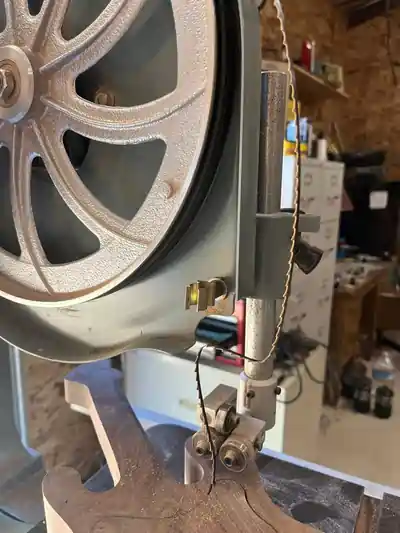
First — don’t panic.
Bandsaw designers know that blades eventually snap. Modern machines are built with full blade guards and enclosed cases that contain the broken blade safely when it happens. A snapped blade might startle you, but it almost never causes injury.
Blades break — usually because they’ve been pushed too far.
In over 30 years (6 under our ownership) of supplying blades, we’ve never had a single report of an injury from a break. In the meat and butchery industry, hundreds of blades break every week without incident.
Most blade breakages are caused by setup or wear issues.
👉 See our full guide on why bandsaw blades fail
What happens when a blade snaps
When a bandsaw blade breaks under tension:
- The drive stops instantly — there’s no longer any tension or “whip”.
- The upper wheel becomes a quiet, free-spinning flywheel; it might turn for a while, but it’s harmless.
- The broken ends of the blade are contained inside the machine housing.
The most you’ll experience is a quick jolt and perhaps a surprise.
The small risk — and how to avoid it
The only realistic way a broken blade could move outside the machine is if it feeds out of the right-hand side of the table. To stay safe:
- Keep people and objects clear of the right side of the saw.
- Keep the top blade guide as low as possible.
This limits the blade’s ability to move sideways if it breaks and helps contain it. - Maintain correct tension and alignment.
Over-tensioning or poor wheel setup increases the chance of premature failure. - Inspect for cracks or fatigue.
Look near the weld and around the tooth gullets, especially if you’ve heard clicking or seen shiny stress marks.
Common causes of breakage
- Dull or work-hardened blades not replaced soon enough
- Incorrect tensioning (too tight or too loose)
- Guides set too high
- Blade rubbing against guards or wheels
- Small offcuts getting trapped between the blade and wheel
The bottom line
A bandsaw blade breaking is rarely dangerous, but it’s always a sign to check your setup, maintenance, and cutting habits. If you treat your saw and blades properly, the only thing you’ll lose when a blade break’s is time.
IMPORTANT SAFETY CONTEXT
All industrial machinery is inherently dangerous if used without proper training, correct setup, and appropriate personal protective equipment (PPE).
Bandsaws are no exception. Operators should always follow the machine manufacturer’s safety instructions, ensure guards are correctly fitted, use suitable PPE, and make sure anyone operating the machine is properly trained.
That said, when a bandsaw is set up and used correctly, a blade breaking is not considered a particularly dangerous event compared with many other workshop hazards. Modern bandsaws are specifically designed to contain a broken blade, and real‑world industry experience shows that injuries caused by blade breakage itself are extremely rare.
This article focuses specifically on the risks associated with blade breakage, not on general bandsaw operation or misuse.
