

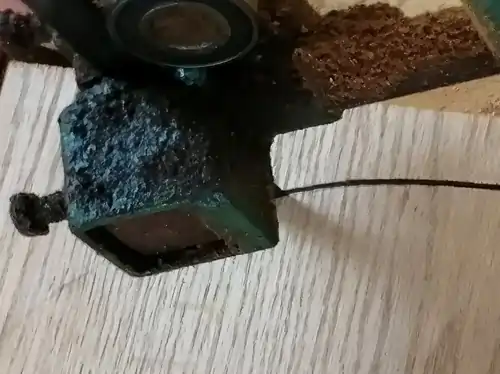
If your cut won’t follow the line, the blade isn’t tracking straight through the wood.
This is usually called wandering or drift — and it’s one of the most common bandsaw problems.
It’s not random. There’s always a reason.
What “Wandering” Means
A wandering blade does not cut where you guide it.
Typical signs:
- Cut drifts away from your marked line
- Blade feels like it’s being pushed sideways
- You have to twist the work to stay on line
👉 In simple terms:
The blade is deflecting instead of cutting straight.
Why It Happens
Wandering is almost always caused by a loss of blade stiffness or cutting ability.
Blade too narrow
Narrow blades flex more easily.
- Fine for tight curves
- Poor for straight cuts in thicker timber
👉 The blade simply isn’t rigid enough to hold the line.
Dull blade
A dull blade doesn’t cut cleanly — it rubs and pushes.
- Increases resistance in the cut
- Forces the blade off track
👉 This is one of the most common causes.
Incorrect blade tension
Low tension allows the blade to move side-to-side.
- Reduces beam strength (stiffness)
- Makes wandering much worse
👉 A loose blade will never track straight.
Feeding too fast
Pushing material too hard overloads the blade.
- Teeth can’t clear material
- Blade gets forced sideways
👉 Even a good blade will wander if overloaded.
Uneven blade wear from repeated one-direction cutting
If you regularly cut curves in the same direction, the blade can wear unevenly.
- Teeth on one side of the blade do more work
- That side becomes dull faster
- The opposite side remains sharper
- The Set can also be distorted on the hard-working side of the blade
👉 The blade will start to pull toward the sharper side.
Signs of uneven wear
- Blade won’t cut straight even when setup is correct
- You have to force the cut
- Wandering gets worse over time
- Blade feels “biased” to one direction
Fix
- Replace the blade if wear is significant
- Use a narrower blade for tight curves
- Avoid repeatedly cutting the same direction where possible
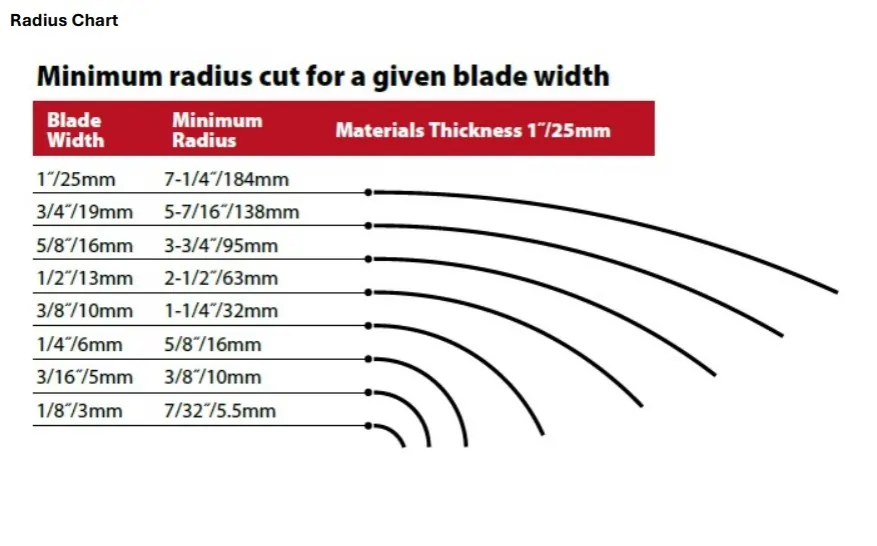
Wider blades cannot cut tight curves — forcing them will cause wandering and burning.
👉 In some cases, cutting the opposite direction can temporarily balance wear. Use a narrower Bandsaw Blade for tighter curves
Blade Selection Matters
The Wood blade has to match the job.
Blade width
- Wider blade = more stability
- Better for straight cuts and resawing
Cutting curves too tight for the blade width
When cutting curves, the blade needs to turn within its radius.
- A wide blade cannot turn tightly
- Forcing it around a tight curve increases friction
- The blade rubs sideways instead of cutting
👉 This quickly generates heat and causes burn marks on the wood.
Fix:
- Use a narrower blade for tighter curves
- Don’t force the blade around the turn
Tooth pitch (TPI)
- Too fine → slow cutting → more heat and deflection
- Too coarse → rough finish but usually tracks straighter
👉 If unsure, start with a general-purpose wood blade and adjust from there. how to choose the correct TPI
Machine Setup Still Matters
Even a good blade won’t perform if the saw is poorly set.
Check:
- Guide alignment (side guides and thrust bearing)
- Blade tracking on wheels
- Correct tension
👉 These don’t usually cause wandering alone — but they make it worse.
👉 if your saw still won’t cut straight even after setup
In Simple Terms
A bandsaw blade wanders when it cannot stay rigid in the cut.
That usually comes down to:
- Blade too narrow
- Blade too dull
- Not enough tension
- Feeding too hard
Fix those, and the problem usually disappears.
- 👉 If your blade is burning the wood instead of cutting cleanly, see:
Why Wood Burns When Cutting with a Bandsaw - 👉 If your cut quality is poor or splintering, see:
Why Bandsaw Cuts Are Rough in Wood