

Portable sawmill bandsaw blades operate under very different conditions to standard wood cutting.
When milling logs, blade type, tooth material, and setup all directly affect cutting speed, finish, and blade life.
Choosing the right blade is not about what is “best” overall — it is about what performs best for your timber, your machine, and how often you mill.
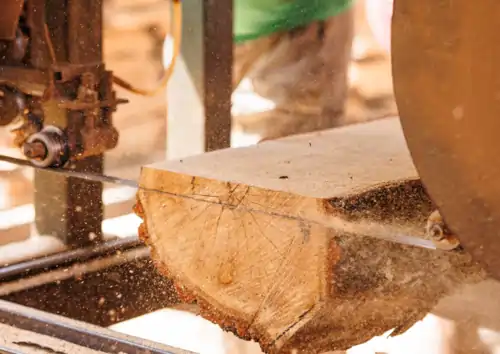
What Makes Sawmill Blades Different
Milling logs places unique demands on a bandsaw blade:
- Timber is often green (wet and fibrous)
- Cuts are long and continuous
- Chip volume is high
- Blades are long and cycle constantly around the wheels
Because of this:
👉 Tooth durability matters more than in standard wood cutting
👉 Chip clearance is critical
👉 Blade fatigue becomes a real factor over time
This is why blade choice has a much bigger impact on performance when milling logs than many operators expect.
Types of Portable Sawmill Blades
There are three main blade types used on portable sawmills.
Carbon Steel Sawmill Blades (Standard)
These are the most commonly used blades on portable mills.
- Low cost
- Flexible and forgiving
- Widely available
- Typically used on mills such as Woodmizer-style machines
They perform well for:
- softwoods
- clean logs
- occasional milling
However:
- edge wear is relatively fast
- performance drops off as the blade dulls
- frequent blade changes are often required in harder or abrasive conditions
Bi-Metal Bandsaw Blades for Wood
Bi-metal blades use a hardened tooth edge bonded to a flexible backing material.
Compared to carbon blades:
- Higher wear resistance
- Longer usable cutting life
- More consistent performance through the cut
- Less frequent blade changes
They are a practical upgrade where:
- blade life is too short
- hardwoods are being milled
- consistency matters
They are not a universal replacement — but in the right conditions, they can significantly improve efficiency.
TCT (Carbide Tipped) Sawmill Blades
TCT blades use carbide teeth for maximum wear resistance.
- Extremely long cutting life
- Handles abrasive or dirty logs well
- Maintains sharpness much longer than steel teeth
However:
- Higher upfront cost
- Requires correct setup (feed, alignment, guides)
- Not always justified for occasional use
TCT blades make the most sense where:
- logs contain dirt, bark, or sand
- hardwoods are regularly milled
- downtime from blade changes is costly
Common Blade Choices for Milling Logs
-
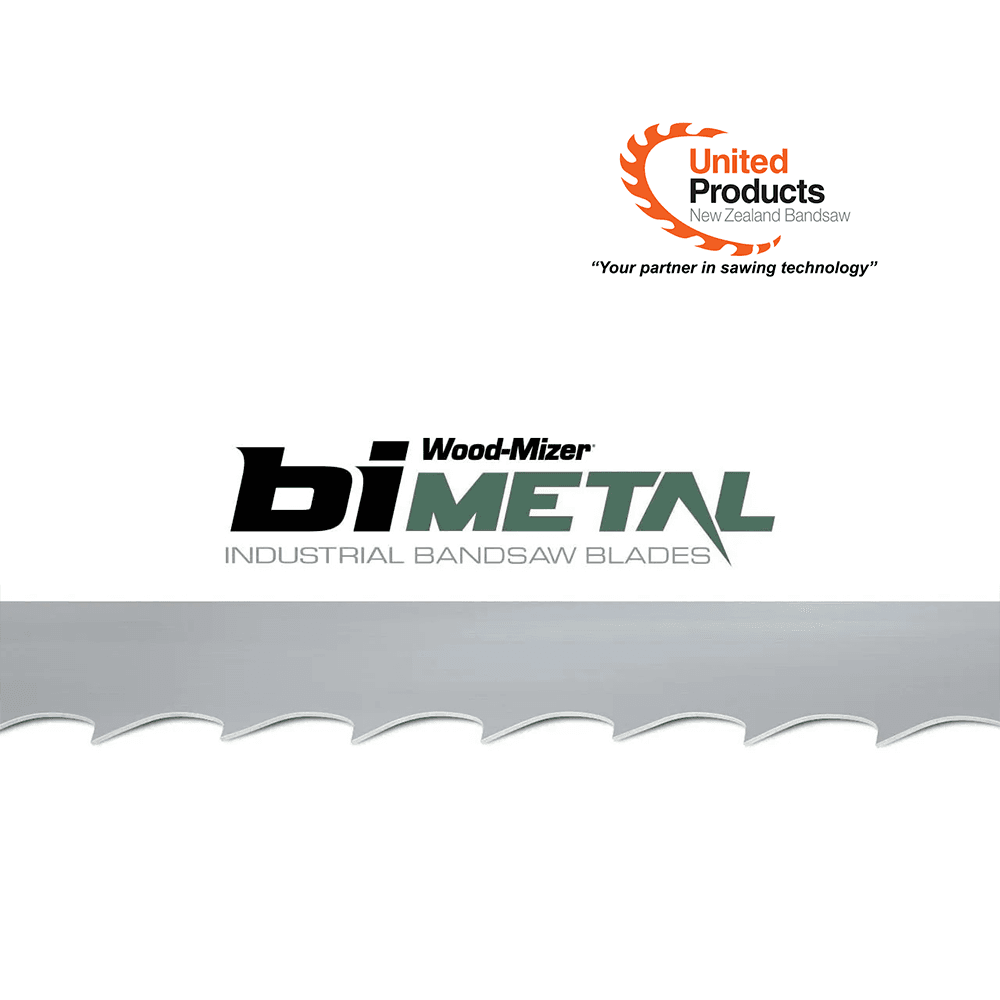
Wood-Mizer Bi-Metal Woodmill Bandsaw Blade 34mm x 1.07mm (.042″) x 1.14 tpi
-

Woodmill Bandsaw Blade 34mm x 1.07mm (.042″) x 1.14 tpi
-
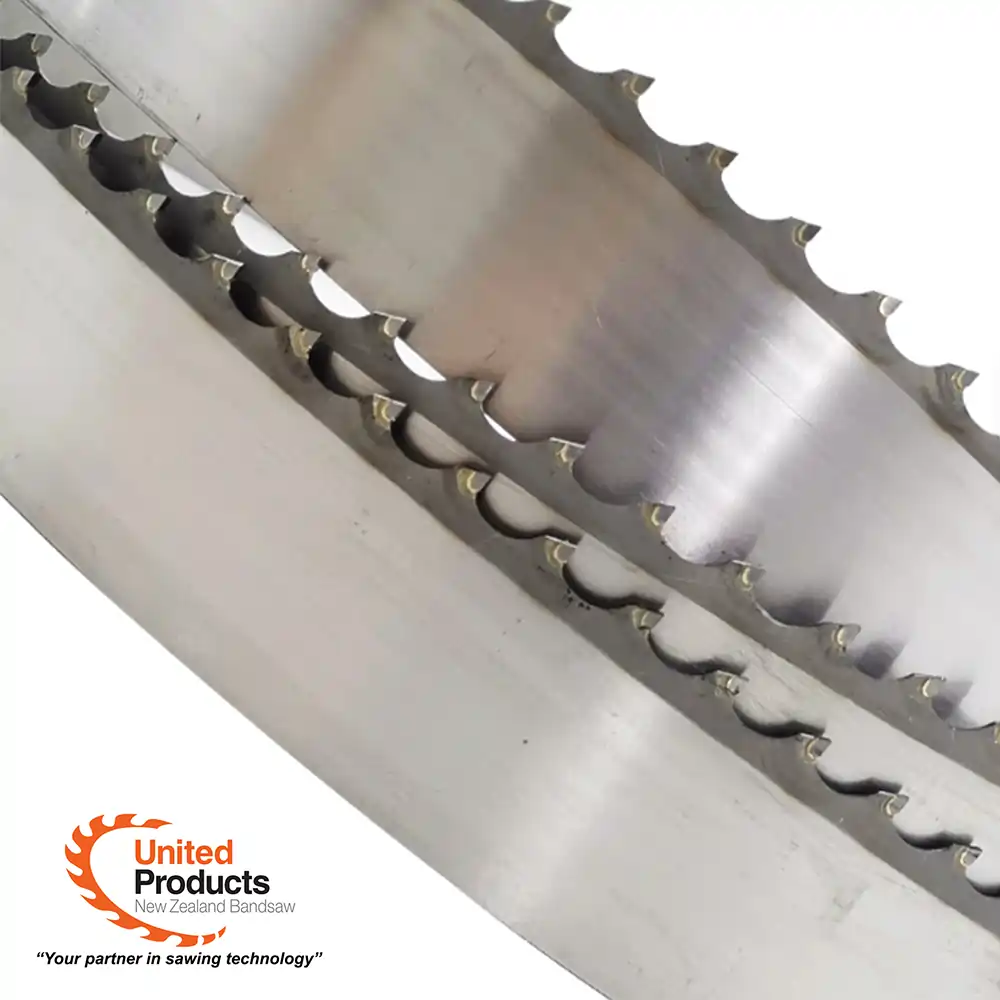
TCT Woodcutting Blade 35mm x 1.07mm (.042″) x 1.14tpi 5 chip
-
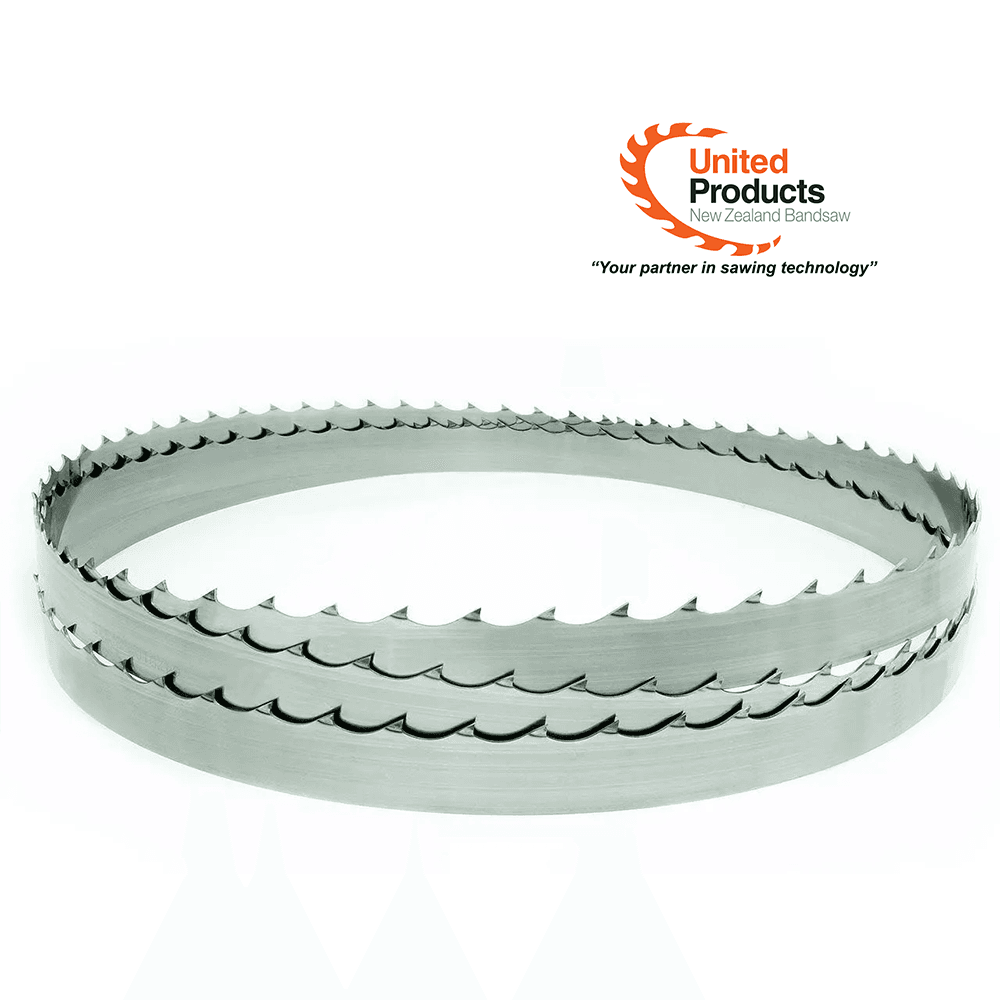
Woodmill Bandsaw Blade 41mm x 1.07mm (.042″) x 1.14 tpi
Custom welded to your machine length
Choosing the Right Blade for Your Timber
There is no single “best” blade — it depends on what you are cutting.
Softwood (clean logs):
Carbon blades are often sufficient
Hardwood:
Bi-metal or TCT will typically give better life and consistency
Dirty or abrasive logs:
TCT becomes the most reliable option
Occasional use:
Carbon remains the most cost-effective
Regular or production milling:
Upgrading blade type can reduce downtime and improve output
The key is matching blade performance to your actual use — not just the lowest upfront cost.
Common Problems When Milling Logs
Many cutting issues are caused by blade choice or condition rather than the machine.
Blade going dull quickly
Often caused by:
- using carbon blades in abrasive conditions
- lack of correct break-in
👉 See: Bandsaw Blade Break-In Guide
Wavy or wandering cuts
Usually linked to:
- loss of edge sharpness
- insufficient blade stiffness
- incorrect setup
👉 See: Bandsaw Blade Guides & Setup
Slow cutting or burning
Common causes:
- incorrect tooth pitch
- too fine a blade for the cut
👉 See: Choosing the Right TPI for Bandsaw Blades
Can You Upgrade from Standard Sawmill Blades?
Yes — but only where it makes sense.
Carbon blades are fine when:
- milling is occasional
- timber is clean and soft
- blade cost is the main concern
Bi-metal is worth considering when:
- blade changes are frequent
- hardwoods are being cut
- you want more consistent performance
TCT is justified when:
- logs are dirty or abrasive
- milling is regular or production-based
- downtime costs more than the blade
Upgrading is not about buying the most expensive blade —
it is about reducing total cutting cost and improving consistency.
Blade Size and Compatibility
Portable sawmill blades must match the machine exactly.
- Blade length is set by the mill
- Width and thickness must suit the machine design
- Most mills use long, narrow blades designed for log cutting
If you are unsure:
👉 See: How to Find Your Bandsaw Blade Size
Next Step – Ordering the Right Blade
Once you understand what blade suits your use, the next step is simple:
- Choose the correct blade type
- Confirm your blade length
- Order to suit your machine
👉 View our full range of Wood Cutting Bandsaw Blades
👉 Or order a custom-welded Portable Sawmill Bandsaw Blades NZ | Wood-Mizer Compatible blade to your machine size
👉 Need help identifying your blade length? View our portable sawmill blade size guide
👉 Need help Selecting a TPI? View our portable sawmill blade size guide