

How to Cut Mild Steel with a Bandsaw
Mild steel is one of the most common materials cut on a bandsaw — and also one of the easiest to get wrong.
While it is softer than stainless steel, it still generates heat, work hardens under poor cutting conditions, and will quickly destroy the wrong blade.
Even when cutting mild steel, poor cutting technique or incorrect setup can overload the blade — failure often shows up at the weld → understand why Bandsaw Blades Break at the Weld (Causes, Diagnosis & Prevention)
The key to cutting mild steel successfully is:
- choosing the right blade type
- selecting the correct TPI
- running the saw at the right speed and feed
Get these right, and mild steel cuts cleanly, accurately, and with good blade life.
Aluminium requires a different approach again — especially around chip loading and tooth selection.
👉 How to Cut Aluminium with a Bandsaw (Blade Selection, Speeds & Common Problems)
What Is Mild Steel (and Why It Matters)
Mild steel is a low carbon steel that is:
- softer than stainless
- easier to machine
- less abrasive on the blade
However, it still behaves very differently to wood:
- it requires much lower cutting speeds
- it generates significant heat
- it needs controlled feed pressure
This is why blades that work fine in wood will often fail quickly in steel.
Best Bandsaw Blade for Mild Steel
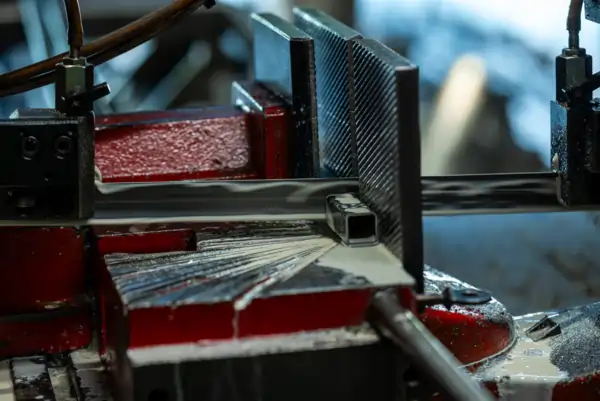
M42 bi-metal bandsaw blade cutting mild steel with proper coolant, speed, and feed
Recommended: Bi-Metal (M42)
For most mild steel cutting, a bi-metal M42 bandsaw blade is the best choice.
For most steel cutting applications, choosing a bimetal vs carbon bandsaw blade will significantly improve blade life and cutting performance.
👉 This is the standard blade used in engineering workshops
Why:
- Heat resistant cutting edge
- Holds sharpness far longer than carbon
- Handles solid sections and structural steel
- More forgiving if speeds/feeds aren’t perfect
👉 See our range of metal cutting bandsaw blades
When Carbon Blades Are OK
Carbon steel blades can still be used for:
- very thin material
- light-duty or occasional cutting
- hobby machines
But:
- they wear quickly
- struggle on material over ~10–15mm
- are not suitable for production work
Cutting thicker steel is very hard on carbon blade life but they are more suitable for cutting Non-ferrous metals, which are metals that do not contain iron
When to Step Up to TCT
Use a TCT (carbide tipped) blade when:
- cutting hardened steels
- large solid sections
- high production environments
Choosing the Correct TPI (Critical)
TPI (teeth per inch) is critical when cutting steel, and works together with blade type and pitch design.
The rule:
👉 Always keep multiple teeth in the cut –
👉 Use our Bandsaw blade tooth pitch calculator
Correct TPI selection is critical when cutting mild steel, especially when moving between thin wall sections and heavy solid material. Learn more about the minimum 3 teeth in the cut rule and correct TPI selection.
Quick guide:
- Thin material (sheet, tube): 14–24 TPI
- Medium sections: 8–14 TPI
- Large solids: 3–6 TPI
For a full breakdown, see:
👉 Easy Guide to Selecting Bandsaw Blade TPI
👉 For smoother cutting and reduced vibration, see:
Why Variable Pitch Bandsaw Blades Cut Better
Cutting Speed and Feed
Speed
Steel must be cut much slower than wood
- Wood cutting speed = very high
- Steel cutting speed = around 8–10× slower
If the blade runs too fast:
- teeth skid instead of cutting
- heat builds rapidly
- blade dulls very quickly
👉 See our guide to metal cutting bandsaw blades for more on speeds, setup, and blade selection
→ link to your Metal Cutting Bandsaw Blades NZ – Choosing the Right Blade for Steel page
Feed Pressure
- Too light → blade rubs → work hardening
- Too heavy → tooth damage
You want a steady, controlled feed where the blade is always cutting.
Coolant and Heat Control
Heat is the main cause of blade failure when cutting steel.
Best setup:
- coolant-fed horizontal saw
If using a vertical saw:
- light lubricant (CRC / WD40) can help
- but is not a substitute for proper coolant
As noted on your metal page, vertical wood saws struggle with:
- speed control
- heat
- coolant application
Common Mistakes When Cutting Mild Steel
1. Using Wood Cutting Speeds
This is the fastest way to destroy a blade.
2. Wrong TPI
Too coarse → tooth stripping
Too fine → clogging and heat
3. Not Breaking in a New Blade
Always run a proper break-in:
👉 Breaking In a Bandsaw Blade: How to Do It Right
4. Using Carbon Blades for Heavy Work
They will cut — but not for long.
5. Letting the Blade Rub
If it’s not cutting, it’s damaging itself.
Can You Cut Mild Steel on a Wood Bandsaw?
Yes — but with limitations.
Expect:
- reduced blade life
- slower cutting
- more heat issues
Key problems:
- machines run too fast
- difficult to apply coolant
- limited feed control
For a full breakdown:
👉 Can You Cut Metal on a Wood Bandsaw?
Summary: Best Setup for Mild Steel
- Blade: M42 bi-metal (recommended)
- TPI: matched to material thickness
- Speed: slow (much slower than wood)
- Feed: steady pressure
- Cooling: coolant preferred
Get these right, and mild steel becomes one of the easiest and most consistent materials to cut.