

Why Bandsaw Blades Break at the Weld
If a bandsaw blade breaks at the weld, it’s easy to assume the weld is the problem.
In reality, the weld is usually just the weakest point revealing a deeper issue.
Most weld failures are caused by:
- Fatigue from repeated flexing
- Incorrect blade tension
- Machine alignment problems
👉 Understanding why the weld fails is the key to preventing it.
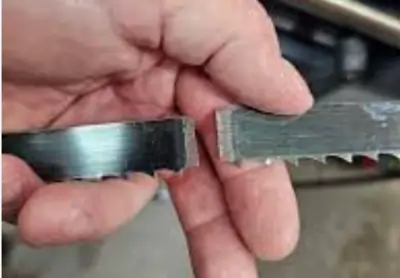
Real-world weld break — most failures like this are caused by application or setup issues, not the weld itself.
The Weld Is Not the Root Cause
The weld sits in a slightly different condition to the parent material.
It is:
- A heat-affected zone
- A natural stress concentration point
- Subjected to constant bending and straightening
Because of this, it will often fail first.
But that does not mean it caused the failure.
Think of it as the first place the problem becomes visible — not where it started.
👉 See the full breakdown: Why Bandsaw Blades Fail
The Real Cause — Fatigue and Work Hardening
Bandsaw blades operate under constant cyclic stress:
- Bend around the wheel
- Straighten through the cut
- Repeat thousands of times
Over time this causes:
- Fatigue (microscopic cracking)
- Work hardening (loss of ductility)
As the steel hardens, it becomes less able to flex.
Eventually:
- A small crack forms
- The crack grows with each cycle
- The blade fails — often at the weld
This is why weld failures are so common:
👉 It’s where fatigue shows up first
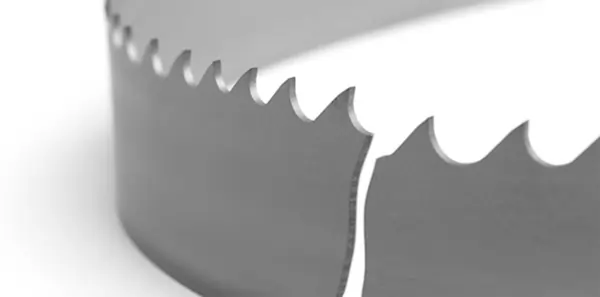
Crack developing near the weld — fatigue often starts before final failure occurs.
👉 Read more: What Is Work Hardening in Metal Cutting?
Common Causes of Weld Breakage
Incorrect Blade Tension
Too high:
- Increases stress in the blade
- Accelerates fatigue
Too low:
- Causes instability
- Blade flexes excessively → uneven loading
Both shorten blade life and lead to failure at the weld.
Small Wheel Diameter
Tighter wheels = tighter bending radius.
This increases:
- Strain in the blade
- Fatigue rate
The smaller the wheel, the harder the blade has to work.
Blade thickness must match the wheel diameter.
Thicker blades are stronger — but they are also less flexible.
If a blade is too thick for the wheel size:
- It is forced to bend beyond its design limit
- Stress increases dramatically with every cycle
- Fatigue life drops quickly
- Failure often shows up at the weld
As a simple rule:
“Smaller wheels require thinner blades”
Matching blade thickness to wheel diameter is critical for:
- Blade life
- Weld reliability
- Overall cutting performance
Ignoring this is a common cause of repeated weld failures.
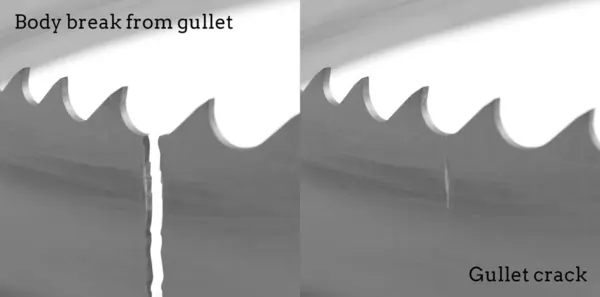
Cracks starting in the gullet area — often caused by stress, poor break-in, or incorrect cutting conditions.
Machine Alignment Issues
If the machine is not aligned correctly:
- Blade twists during operation
- Stress is uneven across the band
This creates localised fatigue — often ending at the weld.
Guide Problems
Incorrect guide setup can cause:
- Side loading
- Back edge stress
- Uneven tracking
This adds stress the blade was never designed to handle.
Poor Break-In
A new blade needs controlled running-in.
If not:
- Micro damage forms at the tooth edge
- Cutting forces increase early
- Fatigue life drops significantly
👉 See: Bandsaw Blade Break-In Guide
How to Diagnose a Weld Failure
This is where most people go wrong — they look at where it broke, not how it broke.
Clean Break (Fatigue)
- Smooth or consistent fracture
- No tearing
- Often after reasonable use
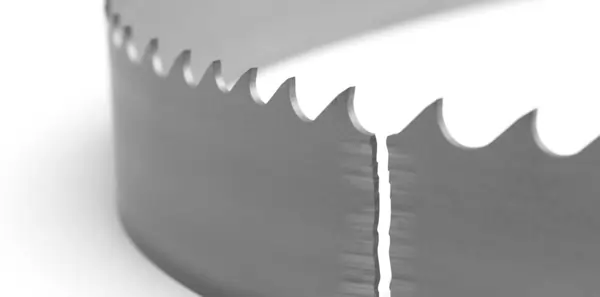
Clean fatigue failure at the weld — typical of long-term stress and flexing, not a weld defect.
👉 Indicates fatigue over time
Jagged or Torn Break (Overload)
- Uneven, ripped appearance
- Often combined with tooth damage
- May show distortion
👉 Indicates excessive load or poor cutting conditions
Crack Starting Point
Look closely:
- Did the crack start at the weld edge?
- Or propagate through it?
This helps separate:
- Fatigue progression
- Sudden overload
Heat Marks
Blueing or discoloration indicates:
- Excess heat
- Poor cutting conditions
- Work hardening
This is a major clue the issue is not the weld.
Repeated Failures
If blades keep breaking at the weld:
👉 It is almost never multiple bad welds
👉 It is a repeatable machine or application issue
When the Weld Actually Is the Problem
This does happen — but it’s rare when done properly.
Possible causes:
- Poor weld quality
- Incorrect annealing
- Contamination in the weld
Signs:
- Very early failure
- No signs of overload or fatigue
- Consistent failure immediately at the weld
Even then, it should be investigated — not assumed.
How to Prevent Weld Breakage
Most weld failures can be eliminated by fixing the real cause:
- Set correct blade tension
- Choose the correct blade and TPI
- Ensure machine alignment is correct
- Set guides properly
- Break in new blades correctly
- Avoid excessive feed pressure or speed
Small improvements here make a massive difference to blade life.
In Simple Terms
Bandsaw blades don’t break at the weld by accident.
They fail from fatigue, overload, or poor conditions.
The weld is simply:
where the problem shows up first
Fix the cause — and the weld stops “failing”.
Need Help Diagnosing a Blade Failure?
If you’re not sure what caused a blade to break, we can help.
Send us:
- A photo of the break
- Material being cut
- Blade size and TPI
We’ll help you identify the real cause — and stop it happening again.
👉 You can also check our Bi-Metal Bandsaw Blade Known Issues Guide for common problems and quick answers.
👉 How to measure your blade length
👉 How to Order a Replacement Blade