

Choosing the right bandsaw blade for cutting steel has a direct impact on cut quality, blade life, and overall cost per cut.
From general fabrication through to stainless steel and hardened hydraulic shafts, different materials require different blade types. Using the wrong blade often leads to short life, poor cutting performance, or unnecessary cost.
This guide explains the main bandsaw blade options available in New Zealand and when to use each.
Best Bandsaw Blades for Cutting Steel (Quick Answer)
- General steel cutting → M42 bi-metal
- Structural steel (RHS, pipe, beams) → M42 (Proflex)
- Stainless steel and larger solids → PM51 bi-metal
- Hardened shafts and difficult materials → TCT (Carbide)
- Cutting aluminium requires a different setup again.
More detail on each option is explained below.
Why Blade Selection Matters When Cutting Steel
Choosing the correct bandsaw blade is not just about cutting—it directly affects productivity, finish quality, and overall operating cost.
- Blade Life: The wrong blade will wear quickly, especially in stainless or hardened materials
- Cut Quality: Incorrect blade selection can lead to wandering cuts, rough finishes, or excessive burrs
- Machine Load: Poor blade choice increases strain on the machine and can reduce accuracy
- Cost Per Cut: Blade life, cutting speed, and downtime all contribute to the true cost of each cut
Selecting the right blade type from the start avoids these issues and delivers more consistent results.
Common Steel Cutting Problems (and the Fix)
- Teeth stripping in structural steel → Use variable pitch blade (e.g. Proflex)
- Short blade life in stainless → Upgrade from M42 to PM51
- Blade dulling quickly on hard materials → Move to carbide (TCT)
- Rough or wandering cuts → Check TPI selection and blade condition
Most cutting issues are solved by selecting the correct blade type for the application.
👉 For a complete explanation and troubleshooting guide, see:
Why bandsaw blades fail
Steel Cutting Bandsaw Blade Options Explained
M42 Bi-Metal – General Steel Cutting
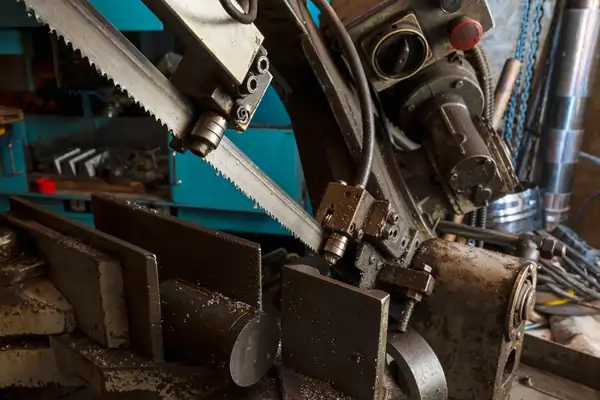
M42 bi-metal bandsaw blades are the industry standard for most steel cutting applications. They offer a reliable balance of performance, durability, and cost.
They are well suited to:
- Mild steel – Blade Selection + Setup Guide
- General fabrication work
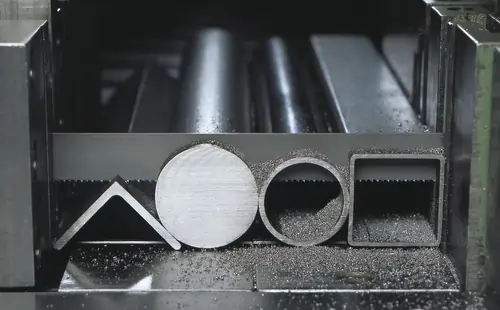
- RHS, pipe and flat bar
- Light to medium solid sections
Within the M42 category, different blades are optimised for different work:
Why Use M42 Bi-Metal Bandsaw Blades?
- High Heat Resistance: M42 contains cobalt, allowing it to maintain cutting performance at higher temperatures
- Good Wear Life: Suitable for continuous cutting in general steel applications
- Versatile Performance: Handles a wide range of materials including mild steel, structural steel, and stainless
- Cost Effective: Offers a strong balance between blade life and purchase cost
M42 remains the most widely used blade type due to its reliability across varied cutting conditions.
- Hakkansson Allpower M42 – a strong all-round production blade used across a wide range of materials and cutting conditions
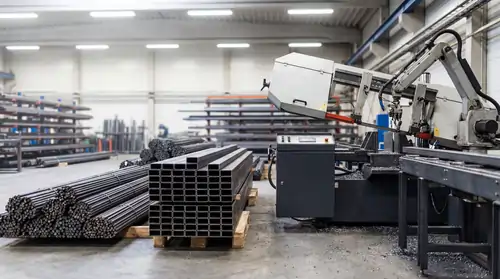
- Wikus Proflex M42 – designed for structural steel cutting, particularly beams, pipe and variable section materials
Why Use a Structural Steel Bandsaw Blade?
Wikus Proflex – Product Brochure WIKUS PROFLEX M42
- Prevents tooth stripping in interrupted cuts (RHS, pipe, bundles)
- Reduces vibration and noise through variable pitch tooth design
- Improves cut accuracy on large structural sections
- Delivers longer blade life in demanding applications
For most users, M42 is the correct starting point.
PM51 Bi-Metal – High Performance Upgrade
PM51 bi-metal bandsaw blades are the next step up when M42 blades are being pushed beyond their limits.
If M42 blades are wearing out too quickly or struggling in stainless and solids, PM51 is the next logical step.
They are typically used for:
- Stainless steel -Blade Selection + Setup Guide
- Larger solid sections
- Higher heat cutting environments
- More demanding production work
PM51 blades use a higher alloy content than M42, providing improved heat resistance and wear life. In practical terms, this means:
M51 vs PM51 – What’s Changed and Why It Matters
- Longer blade life in difficult materials
- More consistent cutting performance
- Fewer blade changes and less downtime
If you are getting inconsistent life from M42—particularly in stainless or solids—PM51 is the logical upgrade.
When Does PM51 Make a Difference?
PM51 becomes relevant when M42 blades no longer provide consistent performance.
- Improved Life in Stainless Steel: Handles heat and work-hardening more effectively
- Better Performance in Solids: Maintains edge integrity in larger cross sections
- Reduced Tooth Wear: Slower wear rate in demanding materials
- More Stable Cutting: Improved consistency in production environments
In many cases, PM51 reduces downtime enough to offset the higher blade cost.
TCT (Carbide) – Hardened & Specialist Materials
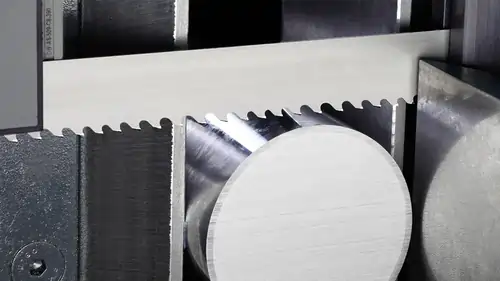
Carbide-tipped (TCT) bandsaw blades are designed for materials that are too hard or abrasive for conventional bi-metal blades.
Typical applications include:
- Hydraulic cylinder rods
- Induction hardened shafts
- Tool steels and high alloy materials
These materials often have a hard outer surface with a tougher inner core. In these situations, bi-metal blades will wear rapidly or fail prematurely.
Carbide blades such as the Wikus Futura are specifically designed for these conditions, maintaining cutting performance where bi-metal blades cannot.
Wikus Futura SN – data sheet – en-GB-FUTURA-SN
In these applications, continuing to use bi-metal blades is not cost-effective—carbide is the correct tool for the job.
Why Use Carbide (TCT) Bandsaw Blades?
- Extreme Wear Resistance: Carbide tips resist abrasion from hardened and chrome-plated surfaces
- Maintains Edge at High Temperature: Suitable for difficult, high-friction cutting conditions
- Cuts Where Bi-Metal Fails: Ideal for materials that quickly destroy conventional blades
- Improved Productivity: Faster, more consistent cutting in specialist applications
Carbide blades are not a general-purpose solution—they are designed for specific, demanding materials where other blade types are not suitable.
Cutting Hydraulic Rams and Hardened Shafts
Hydraulic cylinder rods and similar components present a unique challenge due to their hard outer surface and tough inner core.
This is a common requirement in industries working with hydraulic cylinder repair and manufacturing in New Zealand.
- Surface Hardness: Often chrome-plated or induction hardened
- High Abrasion: Rapidly wears conventional blade teeth
- Heat Generation: Increases during cutting, accelerating wear
For these applications:
- Recommended Blade: TCT (Carbide), such as Wikus Futura
- Typical Setup: Coarser pitch (e.g. 3/4 TPI) for stability in solid sections
- Result: Improved blade life, reduced downtime, and consistent cutting performance
Attempting to cut these materials with bi-metal blades typically results in very short blade life.
Quick Guide – Which Blade Should You Use?
- Mild steel and general fabrication → M42 (Allpower) for reliable all-round performance
- Structural steel (beams, pipe, RHS) → M42 (Proflex)
- Stainless steel and larger solids → PM51
- Hardened shafts and difficult alloys → TCT (Carbide)
When to Upgrade Your Bandsaw Blade
If your current blade is not performing, changing blade type is often more effective than continuing with the same setup.
Typical signs it’s time to upgrade:
- Short blade life in stainless steel → move from M42 to PM51
- Inconsistent cutting in larger solids → PM51 provides better stability and wear life
- Rapid tooth wear on hard materials → move to carbide (TCT)
- Cutting hardened surface materials → bi-metal is often the wrong tool
Before upgrading blade type, also check:
Related Guides
These factors have a major impact on performance.
- TPI selection article
- Blade break-in guide
- Blade failure article
- Variable-Pitch Bi-Metal Bandsaw Blades
- 3 teeth in the cut rule
Custom Welded Bandsaw Blades – Supplied Nationwide
All bandsaw blades are custom welded to length in New Zealand and supplied nationwide.
Whether you are cutting mild steel, stainless, or specialised materials, selecting the correct blade is critical to achieving consistent results and controlling costs.
Not Sure Which Blade to Use?
Find the recommended TPI with our calculator.
If you’re unsure, give us a call, Toll Free: 0800 252 337 – Phone: 09 2678570. Mon-Fri 8.00am to 4.30pmor an email
We’ll base the recommendation on what you’re actually cutting—not just what’s on a spec sheet.