

Cutting Hydraulic Rams & Hard Chrome Rod with a Bandsaw
Hydraulic ram rod and hard chrome shafting can be some of the most difficult materials to cut efficiently with a bandsaw. While many carbide bandsaw blades perform well on general engineering steels, they often struggle when faced with hardened outer surfaces combined with softer core materials.
This is where specialist blade geometry becomes important.
For workshops regularly cutting hydraulic cylinder rod, hard chrome plated shafting, or case hardened steel, the Wikus FUTURA® SN is designed specifically for these demanding applications.
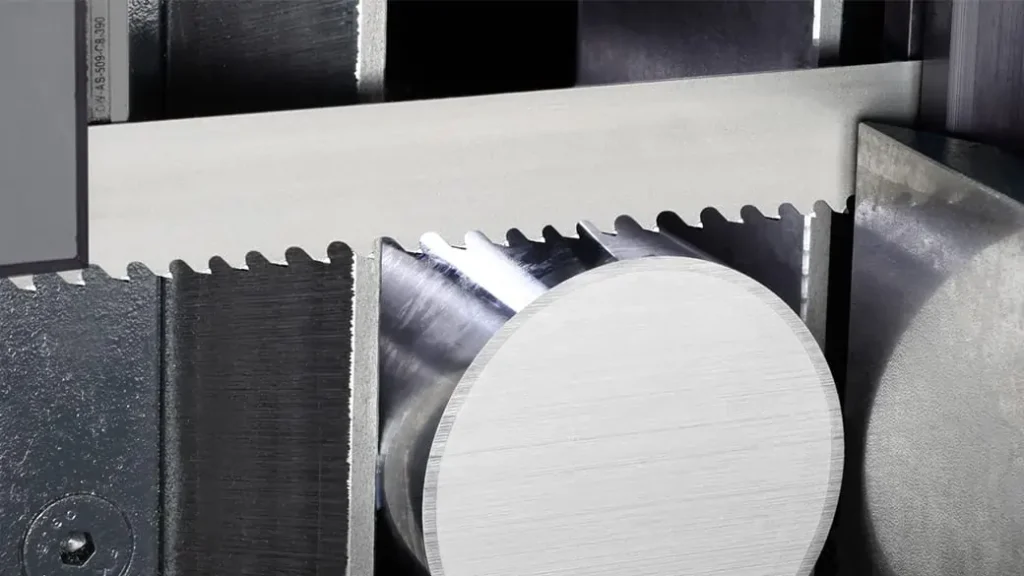
Wikus FUTURA® SN specialist carbide bandsaw blade designed for hard shell and soft core materials such as hydraulic ram rod and hard chrome shafting.
Why Hydraulic Ram Material Is Difficult to Cut
Hydraulic ram rod is very different from ordinary mild steel.
Most hydraulic cylinder shafting combines:
- A very hard outer surface
- Chrome plating or surface hardening
- A softer internal core
This “hard shell, soft core” structure creates difficult cutting conditions for standard bandsaw blades.
As the blade tooth enters the hardened outer layer, it experiences very high impact and heat. Once through the surface, the softer core changes the cutting load again. This constant transition between hard and softer material can cause:
- Tooth chipping
- Premature dulling
- Stripped teeth
- Vibration
- Poor surface finish
- Blade wandering
Many workshops discover that a carbide blade which performs well on normal steels suddenly delivers very poor life on hydraulic ram material.
Why Generic Carbide Blades Often Fail
Not all carbide bandsaw blades are designed for hardened surface materials.
Many general-purpose TCT blades use aggressive tooth geometries intended for faster cutting in conventional steels. While this works well in structural steel or solid bar, it can become problematic when cutting hard chrome rod or case hardened material.
Common problems include:
- Excessively aggressive tooth engagement
- Tooth micro-chipping
- Shock loading entering the hardened surface
- Reduced surface finish quality
- Rapid edge wear
In many cases, workshops assume carbide itself is the issue, when the real problem is the blade geometry being unsuitable for the application.
The Wikus FUTURA® SN Difference
The Wikus FUTURA® SN is a specialist carbide bandsaw blade specifically designed for “hard shell and soft core” materials.
According to Wikus, the blade is intended for:
- Surface hardened components
- Hard chrome plated workpieces
- Through hardened steels up to 65 HRC
Unlike more general-purpose carbide blades, the FUTURA® SN uses:
- Optimised special tooth geometry
- Negative rake angle
- Ground trapezoid tooth design without set
This specialist geometry helps reduce tooth shock and improves cutting stability when working through hardened outer layers.
Wikus also notes that the updated FUTURA® SN generation can achieve up to twice the tool life compared with previous versions due to its revised tooth geometry and cutting material combination.
Technical specifications for the Wikus FUTURA® SN can also be viewed in the official product datasheet.
Real-World Results in Hydraulic Repair Work
In real workshop use, we have seen the FUTURA® SN perform extremely well when cutting hydraulic ram material compared with more generic carbide blade designs.
Typical improvements include:
- Longer blade life
- Reduced tooth chipping
- Straighter cutting
- Better surface finish
- Improved consistency
- Reduced downtime from premature blade failure
This is particularly noticeable on:
- Hydraulic cylinder rod
- Hard chrome shafting
- Surface hardened steels
- Difficult engineering materials
For workshops regularly repairing hydraulic cylinders or cutting hardened shafting, using the correct blade geometry can make a significant difference to both productivity and cost per cut.
Recommended Machine Setup
Even with a specialist blade, machine setup remains important.
For best performance when cutting hard chrome or hydraulic ram material:
- Use stable, rigid clamping
- Avoid excessive feed pressure
- Ensure coolant concentration is correct
- Reduce vibration wherever possible
- Follow proper blade break-in procedures
- Use suitable blade speeds for hardened materials
Aggressive feeding is one of the fastest ways to damage carbide teeth when cutting hard surface materials.
If tooth stripping or chipping is occurring, setup should always be checked alongside blade selection.
Related guides:
When to Use FUTURA® SN Instead of Standard TCT
| Material | Standard Carbide Blade | Wikus FUTURA® SN |
|---|---|---|
| Mild steel | Excellent | Usually unnecessary |
| Structural steel | Excellent | Usually unnecessary |
| Stainless steel | Good | Sometimes beneficial |
| Hydraulic ram rod | Often problematic | Excellent |
| Hard chrome shafting | Limited blade life | Designed for application |
| Case hardened steel | Variable results | Excellent |
| Surface hardened materials | Often difficult | Specialist application |
Common Signs You Need a Specialist Blade
If you regularly experience these problems, a specialist blade may be required:
- Teeth chipping early
- Poor blade life
- Excess vibration
- Rough surface finish
- Blade wandering during cuts
- Expensive carbide blades failing quickly
- Difficulty cutting hard chrome surfaces
In many cases, changing to the correct tooth geometry produces a bigger improvement than simply changing blade brand.
Choosing the Correct FUTURA® SN Blade
The FUTURA® SN range is available in multiple widths and pitches depending on machine size and material dimensions.
Typical sizes include:
- 27mm x 0.9mm
- 34mm x 1.1mm
- 41mm x 1.3mm
Selecting the correct blade width and pitch remains important for stability and cutting efficiency.
If unsure, contact us with:
- Machine model
- Material size
- Material type
- Typical cutting application
We can help recommend the correct blade configuration for your application.
When a Premium Bi-metal Blade May Still Be Suitable
Not every difficult material immediately requires a carbide blade.
For many engineering workshops, premium bi-metal blades such as PM51 can successfully cut materials that are beyond the capabilities of standard M42 blades while still offering lower operating costs than carbide.
PM51 blades are often a good option for:
- Tough alloy steels
- Higher strength engineering materials
- Some stainless applications
- Production cutting where carbide is unnecessary
M51 vs PM51 – What’s Changed and Why It Matters
However, hydraulic ram rod, hard chrome plated shafting, and heavily surface hardened materials can still create conditions where specialist carbide geometry becomes the better long-term solution.
Where standard bi-metal or general-purpose carbide blades struggle with tooth chipping or poor blade life, specialist blades such as the Wikus FUTURA® SN are specifically designed for these hard shell and soft core applications.
Conclusion
Cutting hydraulic ram rod, hard chrome shafting, and case hardened materials places very different demands on a bandsaw blade than ordinary steel cutting.
While many carbide blades are designed as general-purpose solutions, specialist materials often require specialist geometry.
The Wikus FUTURA® SN is specifically engineered for hard shell and soft core applications where standard carbide blades commonly struggle, helping improve blade life, cut quality, and overall cutting reliability.
For workshops regularly cutting difficult hardened materials, selecting the correct blade geometry can dramatically improve performance and reduce operating costs.
Related Bandsaw Blade Solutions
PM51 Bi-metal Blades
For tougher engineering steels and demanding production cutting where a premium bi-metal blade may still be suitable.
👉 View PM51 Bi-metal Bandsaw Blades
Wikus PROFLEX M42 Blades
A high-performance variable pitch M42 blade suited to structural steel, general engineering, and fabrication work.
👉 View Wikus PROFLEX M42 Bandsaw Blades
Carbide (TCT) Bandsaw Blades
For difficult-to-cut alloys, hardened materials, and high production cutting applications.
General Metal Cutting Bandsaw Blades
Browse our full range of bandsaw blades for mild steel, stainless steel, alloy steels, and engineering materials.
👉 View Metal Cutting Bandsaw Blades